Rishikesh Half-Day Local Sightseeing: Taxi Guide & Itinerary (2026)
Plan a half-day Rishikesh sightseeing trip by taxi: Ram Jhula, Parmarth Niketan Ganga Aarti, Beatles Ashram, Triveni Ghat & Neelkanth, with timing tips and fares.
- Written by
- Uttarakhand Cab Team
- Updated
- July 17, 2026
- Reading time
- 8 min read
Local travel desk
Cab planning, road timing and fare clarity for Uttarakhand routes.
Want to see more from Uttarakhand Cab 24/7 on Google?
Add us as a Preferred Source and our travel guides get a visible badge whenever they show up in your Google Search, AI Overviews, or AI Mode results.
Add as Preferred Source →Rishikesh in Half a Day: What’s Realistic
Rishikesh rewards slow travel, but if you’re passing through on a Dehradun trip, a stopover en route to Char Dham, or just have an afternoon free, a half-day taxi loop covering the ghats and central sights is genuinely doable — roughly 3 to 4 hours including stops. The key is starting early enough to catch the town before the afternoon heat and finishing at the right ghat for evening Aarti.
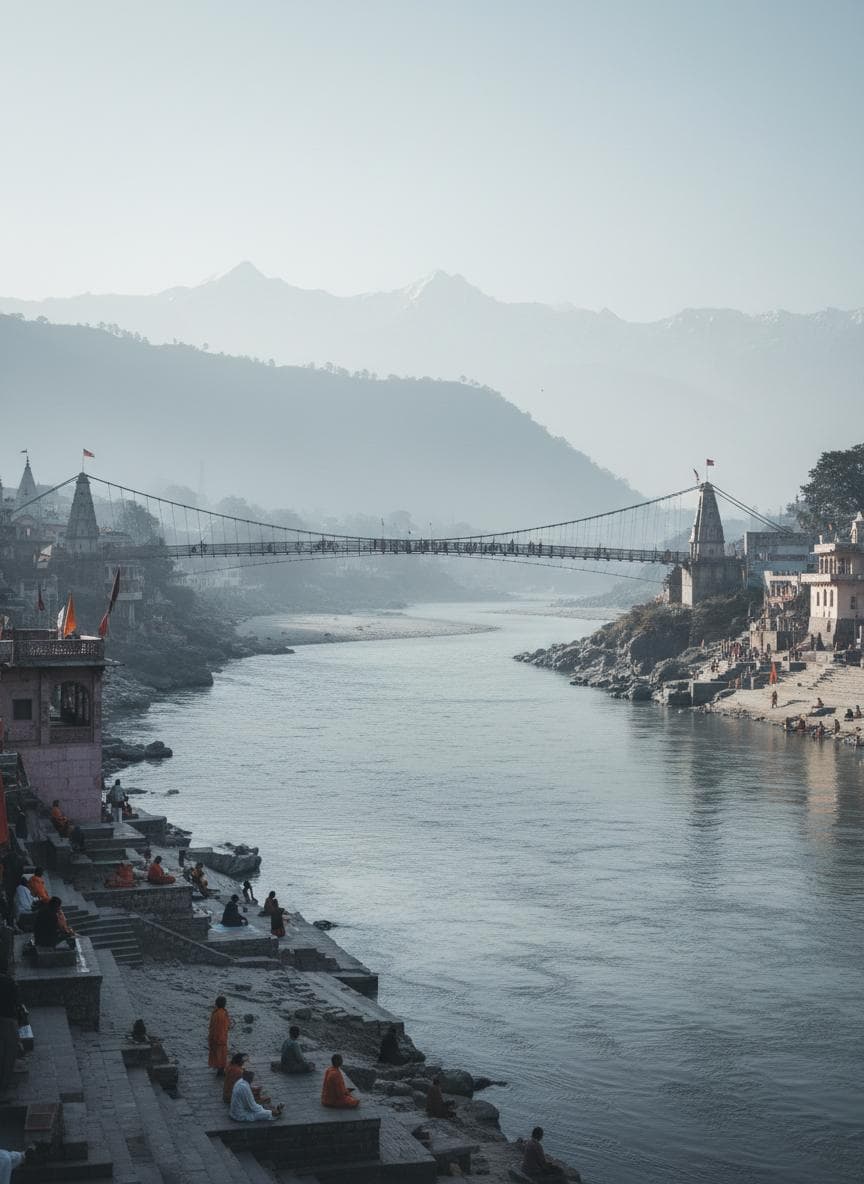
Important note for 2026: Laxman Jhula, the iconic pedestrian suspension bridge, is currently closed for safety renovation. Ram Jhula and Janki Jhula remain open and are the way to cross the Ganges on foot — your itinerary should route around this.
The Half-Day Route
- Triveni Ghat: Start here — the main bathing ghat and a good first stop for photos of the Ganges before crowds build.
- Ram Jhula: Cross on foot to the Swargashram side; this is the functioning suspension bridge now that Laxman Jhula is closed.
- Parmarth Niketan: One of the largest ashrams on the riverbank, and the main venue for the evening Ganga Aarti — worth a daytime walk-through even outside Aarti hours.
- Beatles Ashram (Chaurasi Kutia): The forest ashram where the Beatles stayed in 1968, now an art space with graffiti-covered meditation huts. Entry is ₹150 and it’s one of the most photographed spots in Rishikesh.
- Ganga Aarti (evening finish): If your timing allows, end the loop at Parmarth Niketan or Triveni Ghat for the evening prayer ceremony — free entry, arrive by 5:30 PM for a good spot.
Worth Adding If You Have More Time
If your half-day stretches toward a full day, two options are worth the extra hours: Neelkanth Mahadev Temple, a forested hill temple roughly 32 km from central Rishikesh via a winding but scenic road, popular with pilgrims and quieter than the ghats; and a short stop at the Shivpuri rafting base (16 km out), even if you’re not rafting, just to see the river at its most dramatic. Both are easy additions to a taxi itinerary — ask your driver to build them into the loop rather than treating them as separate trips.
Pro Tips for the Day
- ATMs: Cash machines thin out around the Laxman Jhula/Ram Jhula and ashram area — withdraw what you need in central/downtown Rishikesh before heading up.
- Footwear: Comfortable walking shoes matter more than usual — the ghats and ashram paths involve a fair amount of walking and some uneven stone steps.
- Vehicle access: Standard taxis can’t enter the pedestrian zones near Ram Jhula and Swarg Ashram — your driver drops you at the nearest permitted parking and you walk the last stretch.
- Timing the Aarti: If Ganga Aarti is your priority, plan your loop backward from a 5:30 PM arrival at the ghat rather than trying to fit it in after a full day of sightseeing.
Frequently Asked Questions
1. Can I still walk across Laxman Jhula in 2026?
No — it’s closed for safety renovation. Use Ram Jhula or Janki Jhula instead; both remain open and lead to the same Swargashram-side ashrams and cafes.
2. How much does the Beatles Ashram cost to enter?
₹150 per person as of 2026.
3. Is the Ganga Aarti free?
Yes, entry to the evening Aarti at Parmarth Niketan or Triveni Ghat is free — arrive by 5:30 PM for a seat close to the ceremony.
4. Is a half-day really enough for Rishikesh?
For the core ghats, ashrams, and Aarti — yes, roughly 3–4 hours covers it well. If you want to add Neelkanth Mahadev or spend real time rafting, plan for a full day instead.
Continue planning
Related Guides

Common Uttarakhand Travel Queries
Need a cab for this plan?
Book Your Rishikesh Sightseeing Taxi
Tell us your available hours and priorities — Ganga Aarti timing, Neelkanth, or just the core ghats — and we’ll build a loop that fits. WhatsApp us for a fixed-fare quote.
Message on WhatsApp