Uttarakhand Taxi Booking 2026: The Definitive Guide to Reliable Mountain Travel
The complete 2026 guide to booking a taxi in Uttarakhand — airport transfers, outstation routes, Char Dham logistics, safety standards, and fixed fares.
- Written by
- Uttarakhand Cab Team
- Updated
- July 5, 2026
- Reading time
- 14 min read
Local travel desk
Cab planning, road timing and fare clarity for Uttarakhand routes.
Want to see more from Uttarakhand Cab 24/7 on Google?
Add us as a Preferred Source and our travel guides get a visible badge whenever they show up in your Google Search, AI Overviews, or AI Mode results.
Add as Preferred Source →Essential Terminology for Uttarakhand Travelers
Booking mountain travel without knowing the local vocabulary is one of the easiest ways to end up with a fare that doesn’t match what you expected. Here are the terms that matter most:
Fixed-Fare: An all-inclusive rate covering the full journey, driver allowance, and tolls — agreed before you travel, so nothing changes mid-route regardless of traffic or weather.
High-Altitude Experience: A driver with genuine logged time on routes above 8,000 feet — the Kedarnath approach or the Gangotri highway, for example — where braking technique, weather judgment, and altitude awareness matter far more than they do on flat highways.
Outstation Drop: Travel between two distinct cities or regions, booked as either one-way or round-trip. One-way trips can carry a slightly different rate structure since the driver returns without a paying passenger; round-trip bookings often work out more efficient per day.
Char Dham Package: A multi-day pilgrimage itinerary bundling transport to all four sacred sites — Yamunotri, Gangotri, Kedarnath, and Badrinath — into one booking, typically 10–12 days with vehicle, driver, and overnight halts pre-arranged.
Hill Station Transfer: A shorter booking connecting a transit hub — airport, railway station — to a nearby hill destination like Mussoorie, priced differently from longer outstation routes given the terrain.
Night Halt Allowance: A separate nightly charge paid to the driver when a multi-day itinerary requires an overnight stop away from their base — always worth confirming whether this is already included in a quoted package price.
With this vocabulary in place, the next step is understanding pricing and logistics at Uttarakhand’s busiest entry point — Jolly Grant Airport, Dehradun.
Jolly Grant Dehradun Airport (DED) Taxi Guide
Uttarakhand Cab 24/7 publishes fixed airport fares and tracks your flight before pickup.
| Route | Sedan | SUV / Ertiga |
|---|---|---|
| Dehradun City | ₹1,200 | ₹2,300 |
| Haridwar | ₹2,000 | ₹2,500 |
| Mussoorie | ₹3,000 | ₹4,000 |
Fuel, toll taxes, driver allowance and applicable taxes are included; parking is extra at actuals.
Outstation Cab Services: Beyond Dehradun City
Dehradun functions as the gateway hub for Uttarakhand’s most-visited destinations, and the three highest-demand corridors — Mussoorie, Rishikesh, and Haridwar — each have distinct road characteristics worth knowing before you book.
Dehradun → Mussoorie (35 km, ~1.5 hrs): Steep gradient roads requiring genuine hill-driving experience. Peak season (May–June) brings real congestion near the Mall Road entry gates. Sedan: ₹2,000. SUV: ₹3,000.
Dehradun → Rishikesh (50 km, ~1.5 hrs): A smoother highway stretch with high demand from ashram visitors and Ganga Aarti attendees. A practical choice when continuing onward toward Char Dham routes. Sedan: ₹2,000. SUV: ₹3,000.
Dehradun → Haridwar (55 km, ~1.5 hrs): The most direct of the three corridors. Sedan: ₹2,200. SUV: ₹3,200, with Tempo Traveller options for larger pilgrim groups heading to ghat ceremonies.
One-way bookings are our standard structure on all three routes — you’re never charged for a return leg you don’t need. Sedans comfortably suit two to four passengers on these paved routes; a Tempo Traveller becomes the practical upgrade once your group crosses six or seven people.
Night driving on hill routes gets extra caution from our drivers regardless of route — mountain roads are best driven in daylight, and any late-evening departure is planned with that in mind. These three routes matter on their own, but the planning complexity increases considerably once the destination is a Char Dham temple.
Char Dham Yatra 2026: Logistics and Planning
Char Dham Yatra is the most logistically demanding taxi booking in Uttarakhand, and getting the planning wrong costs pilgrims far more than a missed temple visit. Demand compresses fast once each season’s registration portal opens, and confirmed reservations for peak weeks can become difficult to secure within days.
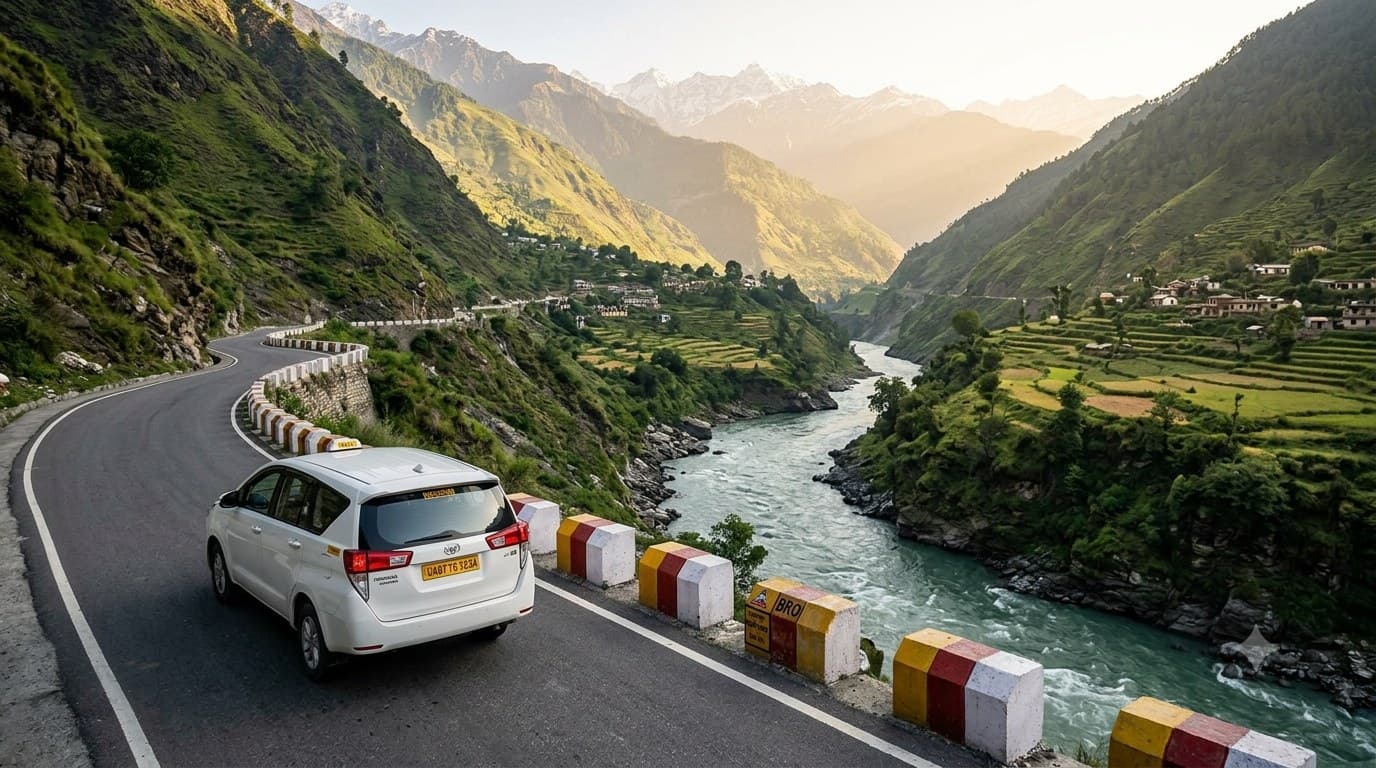
Driver experience matters more here than on any other route type. All four dhams sit above 3,000 metres, with approach roads involving sharp switchbacks, single-lane cliff edges, and weather that can close a route with little warning. Discuss the assigned driver and the planned road approach for each destination before booking — ask any operator directly about their drivers’ mountain experience before discussing price.
Each dham presents its own logistics:
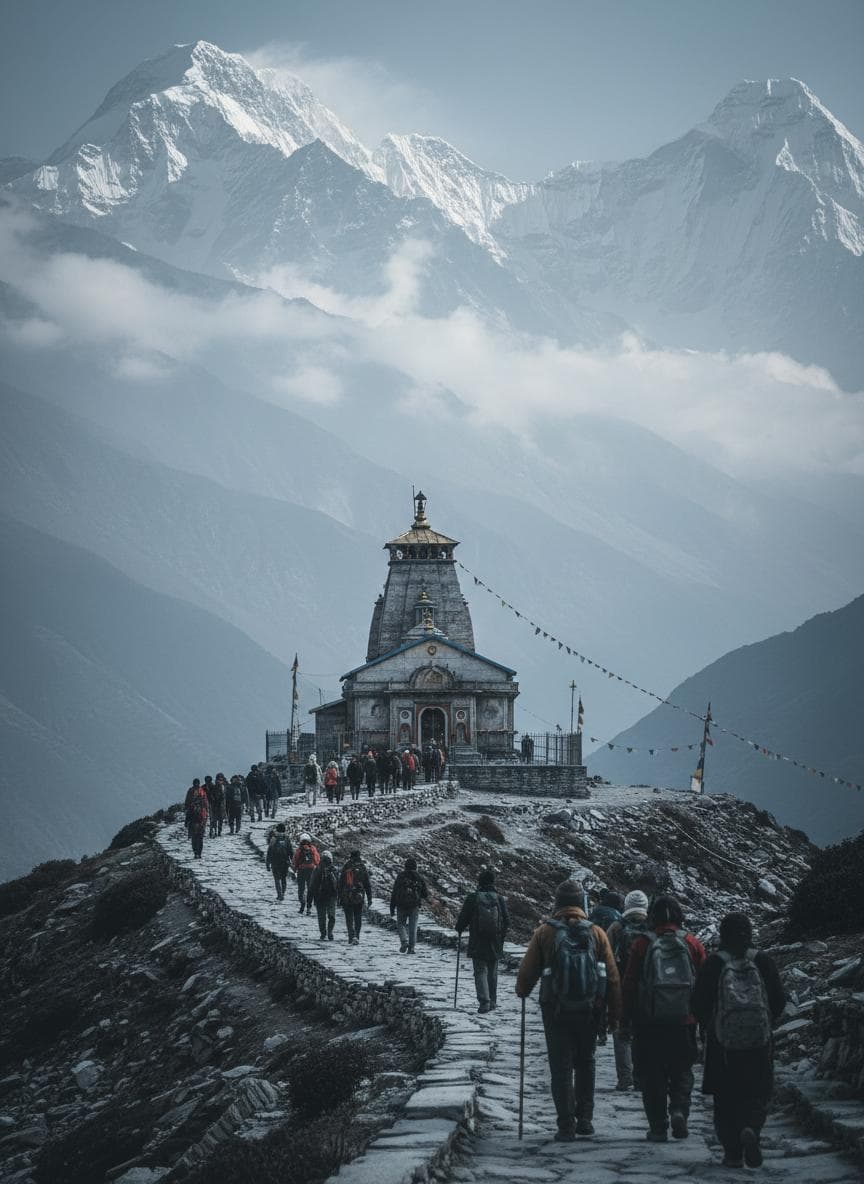
Kedarnath: Private and outstation taxis stop at Sonprayag. From there, pilgrims use the regulated local shuttle for the final approximately 5 km to Gaurikund before beginning the approximately 16–18 km trek or using another officially available pilgrimage option. Confirm your private-vehicle return pickup plan at Sonprayag before starting the trek segment.
Badrinath: The most road-accessible of the four — the vehicle takes you directly to the temple town. Mana village, just beyond, is India’s last village before the Tibet border. Expect delays during peak May–June weeks.
Gangotri: The Uttarkashi–Gangotri stretch narrows considerably past Harsil — an SUV is strongly preferred over a sedan on this leg.
Yamunotri: Reached via Janki Chatti, with a roughly 6 km trek to the temple. An overnight stay at Barkot is usually the practical plan — same-day returns are rarely realistic.
Quick Answer: A complete Char Dham circuit covering all four dhams has this published reference: 10 days: ₹40,000 Sedan / ₹50,000 Ertiga / ₹65,000 Innova Crysta (regular/high-season 2026 reference; off-season rates differ, May–June and cross-season trips require a live quote), with driver and vehicle committed for the full journey.
We typically confirm a Char Dham booking within a few hours of your WhatsApp message, and recommend securing your dates at least 6-8 weeks ahead of the May and September peak windows, when vehicle availability tightens fastest.
2026 Infrastructure Updates: New Roads and Routes
Two highway projects reaching completion in 2026 are worth knowing about if you’re planning travel through Dehradun this year. The Paonta Sahib–Ballupur four-lane highway (₹1,650 crore, NHAI) connects Himachal Pradesh to Dehradun and has already cut the Paonta Sahib-to-Dehradun drive from roughly two hours to about 35 minutes on the completed stretch — relevant if your itinerary approaches Uttarakhand from that direction.
Separately, a four-lane greenfield bypass around Haridwar (₹1,600 crore, phase 1) is targeted for completion around October 2026, intended to divert through-traffic away from Haridwar’s congested core — a stretch that currently adds real delay to Delhi–Dehradun and Delhi–Rishikesh journeys during festival season.
One honest caveat: infrastructure timelines in mountain terrain do slip. If your trip falls close to either project’s target completion window, it’s worth confirming current road status with us closer to your travel date rather than assuming a project is finished on schedule.
Safety Standards for Himalayan Mountain Driving
For hill travel, discuss the route, driving days, passenger count and luggage before choosing a vehicle. Ask about the assigned driver and allow time for rest stops.
Weather and road controls can change a journey. Keep the itinerary flexible, avoid late-night hill driving and confirm the plan with the booking team before departure.
How to Book a Taxi Online in Uttarakhand
Send your pickup, destination, travel date, passenger count and luggage details on WhatsApp. For a tour, include your day-wise plan and final drop.
We check availability, share the vehicle category and fare inclusions, and request the booking advance. Driver and vehicle details are sent before pickup once assigned. Share flight or train details and update us if the arrival time changes.
Frequently Asked Questions (FAQs)
1. Which cab service is best in Dehradun?
Look for verified driver experience, transparent fixed pricing, and genuine 24/7 availability. Operators with a dedicated mountain fleet and real local route knowledge consistently outperform generic ride-hailing apps on reliability for inter-city and pilgrimage routes.
2. What is the rate for an airport taxi from Jolly Grant?
Our fixed fare from Jolly Grant Airport to Dehradun city is ₹1,200 for a Sedan and ₹2,300 for an SUV, tolls included, confirmed before you land — no per-kilometre metering and no curb-side negotiation.
3. Can I book a taxi online for Char Dham?
Yes, and we’d recommend it, especially for the May–June and September peak windows when vehicles are scarce. Booking 6–8 weeks ahead secures a properly experienced mountain driver rather than whatever happens to be available last-minute.
4. Are there extra charges for night travel?
We plan around minimizing unnecessary night driving on mountain routes rather than simply pricing it in — ask us directly about timing if your itinerary involves an early departure or a late arrival.
5. Is the quoted fare really all-inclusive?
Yes — fuel, driver allowance, and standard tolls are built into every fare we quote. Overnight halts on multi-day packages are the one cost confirmed separately, and always before your trip starts, not after.
Key Takeaways for Your 2026 Uttarakhand Trip
Mountain travel rewards preparation and punishes improvisation. A few points worth acting on before your trip:
Pre-book your airport transfer without exception. Jolly Grant Airport taxi availability tightens unpredictably during peak season — a confirmed, fixed-fare booking removes that risk entirely from the moment you land.
Prioritize drivers with genuine Himalayan road experience. Route knowledge on the Badrinath highway or the Kedarnath approach isn’t a nice-to-have — it’s a real safety factor that no map app replicates.
Verify your quoted fare is fully inclusive, in writing. Ask specifically about tolls, driver allowance, and night halt charges before you confirm.
Track road opening dates for May and October 2026 if your itinerary depends on either of the infrastructure projects above — and confirm current status with your driver closer to departure.
Conclusion: Securing Your Himalayan Journey
Reliable Uttarakhand taxi booking in 2026 comes down to one principle: don’t let the pursuit of the lowest headline fare override the safety demands of high-altitude mountain roads. In practice, the gap between the cheapest option and a genuinely well-prepared one is usually smaller than travellers expect — a properly maintained SUV with an experienced mountain driver costs modestly more than an unverified alternative, and removes an entire category of risk from a multi-day pilgrimage or trip.
Uttarakhand Cab 24/7 has operated as a local, Dehradun-based service since 2011 — route knowledge and fixed-price transparency built over years of actually driving these roads, not dispatched remotely from a call centre elsewhere. WhatsApp us your dates and route, and we’ll get you a fixed quote in minutes.
Plan the journey
Turn this guide into a real trip
Check the relevant taxi service or published fares for your route, then message us with your dates for availability.
Continue planning
Related Guides
Common Uttarakhand Travel Queries
Need a cab for this plan?
Book Your 2026 Uttarakhand Taxi
Fixed fares, experienced mountain drivers, and 24/7 support. Message us on WhatsApp with your route and travel dates for an instant quote.
Message on WhatsApp