Char Dham Yatra Registration 2026: Complete Step-by-Step Guide
How to register for Char Dham Yatra 2026: documents needed, the official portal, WhatsApp registration, offline counters, and what to expect at checkposts.
- Written by
- Uttarakhand Cab Team
- Updated
- July 17, 2026
- Reading time
- 10 min read
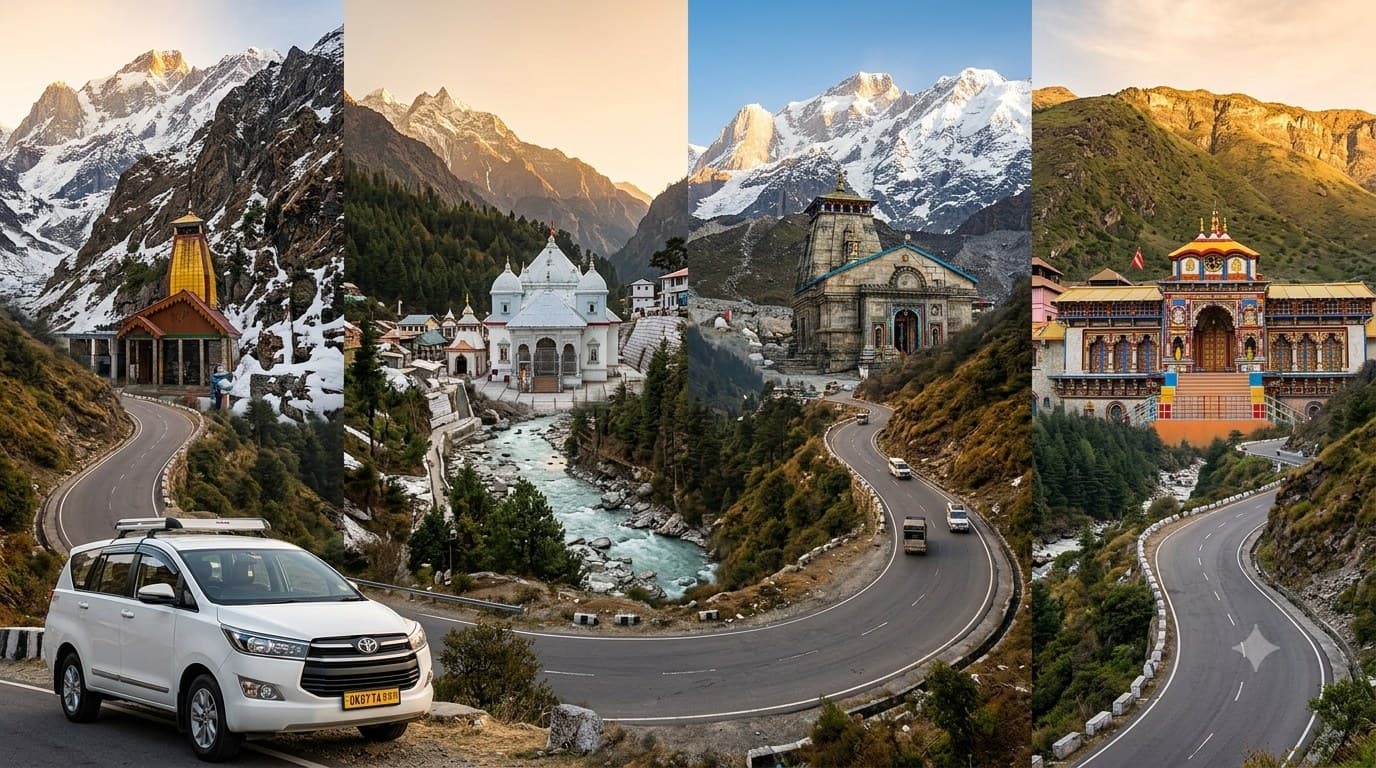
Local travel desk
Cab planning, road timing and fare clarity for Uttarakhand routes.
Want to see more from Uttarakhand Cab 24/7 on Google?
Add us as a Preferred Source and our travel guides get a visible badge whenever they show up in your Google Search, AI Overviews, or AI Mode results.
Add as Preferred Source →Why Registration Is Mandatory
Since the 2013 Kedarnath floods, the Uttarakhand government has required every pilgrim — Indian or foreign national — to register before undertaking the Char Dham Yatra. It isn’t paperwork for its own sake: registration lets the state track how many people are on each route on a given day, cap daily footfall at each shrine so temples and mountain paths don’t get dangerously overcrowded, and locate pilgrims quickly if weather or a landslide closes a stretch of road. You cannot pass the checkposts on the route, or enter the temple complexes, without a valid registration.
The 2026 season opened with Yamunotri and Gangotri on April 19, followed by Kedarnath on April 22 and Badrinath on April 23. Closing dates for this season are confirmed: Gangotri closes November 10, Yamunotri and Kedarnath close November 11, and Badrinath closes November 13, 2026. The season is open now, so if you’re planning a trip before the winter closure, registration is still very much active — it just gets busier around weekends and festival dates.
Documents You’ll Need
- Valid government photo ID — carry an accepted identity document that matches your registration details.
- Registration confirmation / QR code — keep the digital confirmation available and carry a printed copy as a backup where practical.
- An active mobile number — useful for OTP verification and registration communication.
- Prescribed medicines and personal medical information — carry these if applicable, and seek individual medical advice before high-altitude travel if you have cardiac, respiratory, diabetic or other relevant health conditions.
The official Tourist Care registration checklist does not state a blanket medical-certificate requirement solely based on being above a particular age. Follow the current government health advisory and any doctor-specific advice for your own condition.
How to Register — Four Ways
1. Official website (recommended): Go to registrationandtouristcare.uk.gov.in, create a login, enter your travel dates, select which dham(s) you’re visiting and in what order, add each pilgrim’s details and ID, and download your QR-coded e-pass.
2. Tourist Care Uttarakhand app: Available on both iOS and Android, this mirrors the website’s registration flow and also gives you route maps, weather updates, and accommodation info in one place — useful if you’d rather manage everything from your phone during the trip.
3. WhatsApp: Message "YATRA" to +91-8394833833 and follow the automated prompts to receive your QR e-pass — the fastest option if you’re registering last-minute or have patchy signal for browsing.
4. Offline counters: Physical registration counters are set up at Haridwar, Rishikesh, Barkot, Hina, Sonprayag, and Pandukeshwar for pilgrims who’d rather register in person or don’t have reliable internet access. Carry your ID proof with you.
One registration profile covers all the dhams you select, and travel dates can typically be modified afterward if your plans shift slightly — though it’s best to lock in your route order early since daily slots are capped.
What Happens at the Checkposts
Verification happens at checkposts along the route and at each temple entrance — your QR code is scanned (or, in some cases, confirmed via SMS), and the government’s GPS-based tracking system logs pilgrim movement for safety and emergency response. This is also the system that helps authorities reach you quickly if a stretch of road closes for weather.
Print at least one physical copy of your e-pass in addition to having it on your phone — mobile network coverage genuinely drops out in stretches of the high Himalayas, particularly past Joshimath toward Badrinath, and a screenshot you can’t open at a checkpost causes real delays.
Common Mistakes That Delay Pilgrims
- Registering too close to travel dates. Daily slots at Kedarnath in particular fill fastest — during peak season (May–June) it’s common for weekend slots to be booked out days in advance.
- Only having a digital copy. If your phone dies or loses signal, a printed e-pass is the backup that keeps you moving through checkposts.
- Mismatched ID details. The name and ID number on your registration must match the physical ID you carry — a typo during registration can mean re-verification at the checkpost.
- Assuming one registration works for a group without listing everyone. Each pilgrim in your party needs their own details entered, even if you’re travelling together.
Frequently Asked Questions
1. Is Char Dham registration really mandatory, or just recommended?
It’s mandatory. You cannot pass the route checkposts or enter the temple complexes without a valid QR-coded e-pass, regardless of how you’re travelling.
2. Does registration cost anything?
No — registration is free through the website, app, WhatsApp, and offline counters. Be cautious of any third party charging a fee for "registration assistance"; the government process itself has no charge.
3. Can I register for just Kedarnath and Badrinath, not all four dhams?
Yes. The portal lets you select whichever dhams you’re visiting — a full Char Dham circuit, a Do Dham trip, or a single shrine — and register only for those.
4. What if I need to change my travel dates after registering?
Minor changes like travel dates and visit order can usually be updated on the same registration. If you’re unsure whether your change is possible, the toll-free helpline (0135-1364) can confirm.
5. Do I need to register separately for each pilgrim in my family?
Yes — every pilgrim’s details and ID need to be entered individually, even under one family booking.
6. Does my taxi driver handle the checkpost verification, or do I?
Your e-pass and ID are your responsibility to carry and present, but an experienced Char Dham driver will know exactly which checkposts are coming up and what’s expected at each, so there are no surprises en route.
Itinerary Blueprint
6-Day Kedarnath–Badrinath Do Dham Road Plan
A balanced Do Dham plan from the Dehradun–Haridwar–Rishikesh gateway that keeps the Kedarnath trek day separate and avoids combining Badrinath darshan with an unrealistic same-day long return.
Day 1
Dehradun / Haridwar / Rishikesh → Guptkashi area
- Early pickup recommended
- Drive through the Garhwal route with meal and comfort breaks
- Overnight in the Guptkashi / Phata / Sitapur belt according to your stay and next-day plan
Day 2
Kedarnath ascent
- Transfer toward the authorised local transport / trek access point
- Proceed to Kedarnath by the option arranged by the traveller
- Overnight near Kedarnath when travelling on foot
Day 3
Kedarnath descent → Guptkashi area
- Descend with adequate daylight and weather buffer
- Reconnect with the reserved cab after the local access segment
- Overnight in the Guptkashi / Phata / Sitapur belt
Day 4
Guptkashi area → Joshimath / Pipalkoti
- Road transfer toward the Badrinath side
- Use the day as a comfortable positioning day
- Overnight at Joshimath or Pipalkoti depending on hotel and road plan
Day 5
Badrinath darshan + nearby permitted sightseeing
- Early departure for Badrinath
- Darshan and nearby sightseeing according to opening hours, traffic and local access
- Return to Joshimath / Pipalkoti or stay at Badrinath according to the final tour design
Day 6
Return to Rishikesh / Haridwar / Dehradun
- Start early for the long return drive
- Keep railway or flight connections on a realistic buffer
- Final drop at the pre-confirmed gateway point
Drive times are approximate and vary with traffic, weather, road work and season. Use this as a planning blueprint; the final cab route, stops and schedule should be confirmed for your exact travel dates.
Continue planning
Related Guides
Common Uttarakhand Travel Queries
Need a cab for this plan?
Book Your Char Dham Taxi — We Handle the Route, You Handle Registration
Once you’ve registered on the official portal, WhatsApp us your dham selection and travel dates. Our Char Dham-certified drivers know every checkpost on the route and build realistic timing around your registered slots.
Message on WhatsApp